March 9, 2026 • Garage Door Fort Smith
Garage door maintenance advice is written for a generic America. The Arkansas River Valley isn't generic — humidity rusts springs and cables, August heat bakes lubricant off metal, and spring storms torque every fastener on the door. Here's the maintenance checklist that actually fits Fort Smith-area conditions, once a year (twice for high-use doors).
This is the step the River Valley adds. Check the torsion spring coils, cable strands (especially near the bottom brackets where moisture collects) and track surfaces for surface rust. Light rust on springs can be cleaned and lubricated; deep pitting or rusted cable strands mean replacement is near — budget for it before it strands you.
Wipe the tracks inside and out with a dry rag — never grease tracks; lubricated tracks collect dust and cobwebs into an abrasive paste. Blow or brush debris from the opener rail, and gently clean the photo-eye sensor lenses, which false-trigger when filmed with dust or blocked by a drifting storage box.
Use a garage-door-rated white lithium or silicone spray — never WD-40 which is a solvent that strips lubricant. Hit: torsion spring coils (a light coat along the top — this is your rust defense), roller bearings (not nylon wheels), hinge pivot points, and the bearing plates at each end of the torsion shaft. Cycle the door twice to work it in.
A garage door cycles a thousand-plus times a year and vibrates the whole way. Check every lag screw at the track brackets, the hinge bolts, and the opener mounting hardware. In storm country, also verify the track is solidly anchored to framing — a wind gust catching a loose-tracked door can rack the whole system.
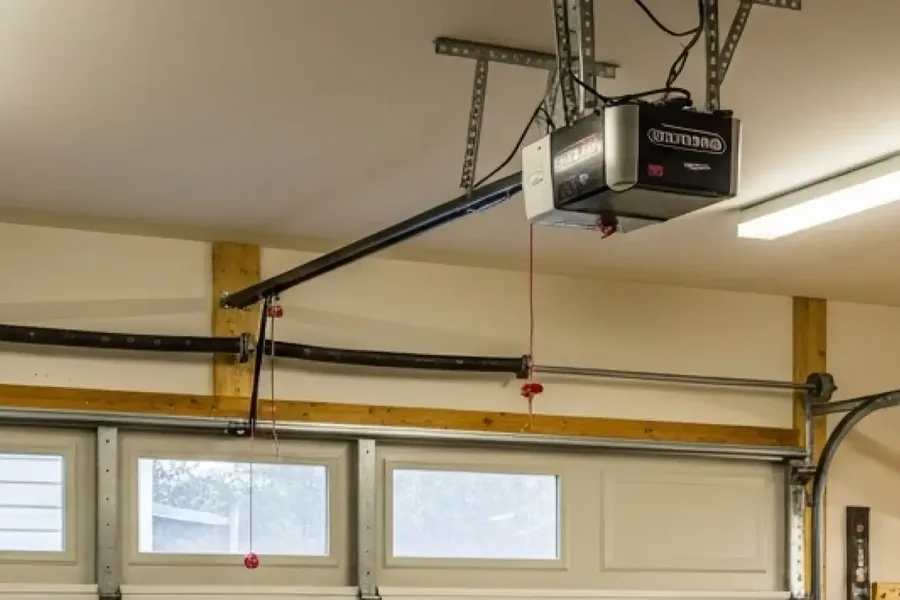
With the door fully closed, pull the red release cord to disconnect the opener. Lift the door by hand to waist height and let go. A balanced door stays put; a door that slams down or drifts up has a spring problem — and the opener is quietly paying for it. Balance issues are pro territory; don't adjust springs yourself.
Two tests, thirty seconds each. Reversal test: lay a 2×4 flat under the door and close it — the door must reverse on contact. Photo-eye test: wave a broomstick through the sensor beam while closing — the door must reverse immediately. If either fails, stop using the opener until it's fixed.
The bottom seal keeps out water, humidity and the occasional field mouse. If it's cracked, flattened or daylight shows beneath the closed door, replacement is a cheap, quick job — and in our climate it pays for itself in a drier, cleaner garage.
Anything involving springs, cables, drums or opener internals belongs to a technician. An annual professional tune-up in the Fort Smith area runs $89–$129 and covers this entire list plus a written condition report. Call (844) 595-3330 to schedule yours before storm season.
One call connects you with an insured garage door technician serving Fort Smith and the River Valley — same-day appointments available in most cases.